


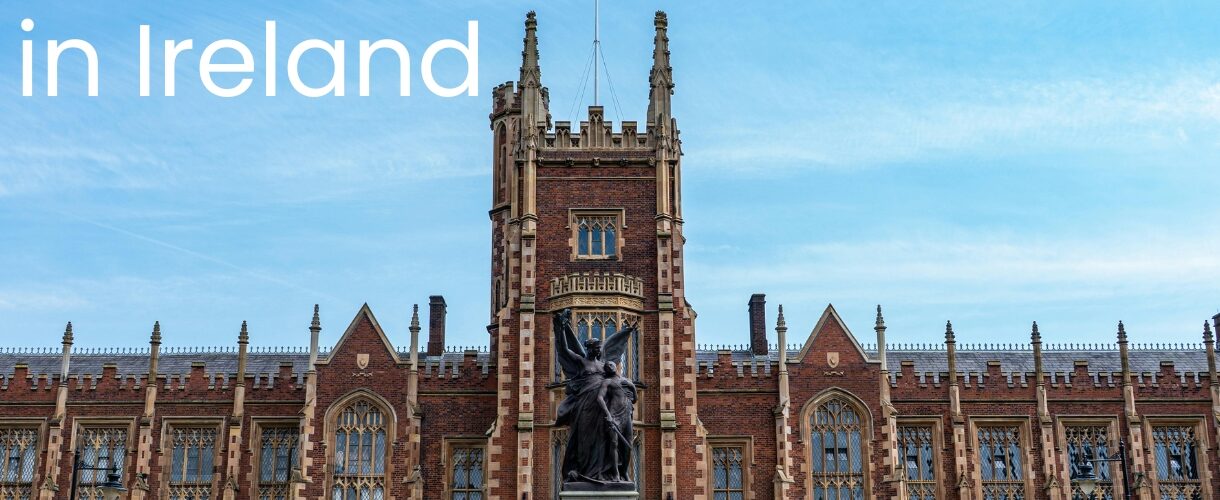
Choosing a university abroad involves more than looking at rankings. For Indian students, the right Irish university should match your academic background, preferred course, budget, location, career plans and eligibility requirements.
Ireland has several internationally recognised higher-education institutions offering programmes across technology, business, engineering, science, healthcare, humanities and other fields. Education in Ireland’s official university directory includes institutions such as Trinity College Dublin, Dublin City University, University College Cork, University of Galway and University of Limerick, among others.
This guide explores Ireland’s top universities for Indian students, the courses they are known for, approximate tuition considerations, admission requirements, student work rules and post-study opportunities.
Why Are Irish Universities Popular with Indian Students?
Ireland offers a combination of internationally oriented education, English-medium programmes and opportunities to study in fields such as technology, business, engineering, data, science and healthcare.
Another factor is Ireland’s student immigration framework. Eligible non-EEA students with Stamp 2 permission can generally work up to 20 hours per week during term time and up to 40 hours during specified vacation periods. Students should understand that work permission is subject to immigration conditions and should not be treated as a way to fund the entire cost of studying abroad.
Ireland also has the Third Level Graduate Programme. Eligible graduates with an Irish Level 8 qualification may receive up to 12 months of graduate immigration permission, while eligible Level 9 or higher graduates may receive up to 24 months, subject to the applicable conditions.
Ireland’s Top Universities for Indian Students
There is no single university that is the right choice for every Indian student. The following institutions are among the major Irish universities international applicants commonly consider.

This article is for educational and informational purposes. University admission requirements, tuition fees, visa rules, scholarships, immigration policies and post-study opportunities may change. Students should verify the latest information with the relevant university, government authority, immigration department, embassy or official source before making a decision.
Trinity College Dublin
Trinity College Dublin is Ireland’s oldest university and is located in the centre of Dublin.
It offers programmes across areas including:
- Business
- Computer science and technology
- Engineering
- Medicine and health sciences
- Natural sciences
- Humanities
- Social sciences
For 2026/27, Trinity’s published international undergraduate fees vary substantially by programme. For example, its BESS programme lists a non-EU Year 1 fee of approximately €22,580, while Physiotherapy is approximately €26,880. The university states that fees can vary by programme and may change according to its fee policies.
For postgraduate students, fees are also programme-specific, so applicants should check the individual course fee rather than relying on a university-wide figure.
University College Dublin
University College Dublin (UCD) is a major research university based in Dublin.
Students can explore areas such as:
- Computer science
- Data and analytics
- Engineering
- Business
- Finance
- Architecture
- Agriculture and food science
- Health sciences
- Social sciences
UCD can be particularly relevant for students who want access to a large university environment in Dublin and are considering technology, business, engineering or related disciplines.
Students should compare individual programmes carefully because tuition fees, entry requirements, duration and scholarship availability vary by course.
University College Cork
University College Cork (UCC) is based in Cork and offers undergraduate, postgraduate and research programmes across multiple disciplines.
Popular areas students may explore include:
- Business and finance
- Data and analytics
- Computer science
- Engineering
- Medicine and health
- Science
- Food and nutrition
- Humanities
UCC’s 2026/27 international undergraduate fee schedule shows significant variation between programmes. For example, published non-EU fees include approximately €21,700 for several business programmes, although the actual fee depends on the chosen course.
For postgraduate study, UCC’s 2026/27 fees also vary by programme. Its published schedule lists approximately €22,300 for the non-EU MSc in Business Analytics, while several other programmes are listed at approximately €19,700.
University of Galway
University of Galway offers programmes across business, engineering, science, medicine, computing, humanities and other areas.
It can be an option for students who prefer studying outside Dublin while still attending a major Irish university.
For 2026/27, the university publishes programme-specific international undergraduate fees. For example, its published figures include approximately €19,890 for BSc Psychology and approximately €20,890 for a Computer Science and Mathematical Studies programme. Other programmes have higher fees.
The university notes that tuition fees are subject to change and that fees for programmes longer than one year can increase in subsequent years.
Dublin City University
Dublin City University (DCU) has a strong focus on areas including business, computing, engineering, communications, education, humanities and social sciences.
It can be relevant for Indian students interested in:
- Computing
- Artificial intelligence
- Data-related fields
- Engineering
- Business
- Finance
- Communications
- Education
DCU’s published 2026/27 postgraduate fee information shows that programme fees vary. For example, its MSc in Computing lists a non-EU tuition fee of approximately €25,000 per year. DCU also publishes programme-specific scholarships, including certain international scholarships that can reduce eligible tuition fees.
University of Limerick
University of Limerick is another public university that international students can consider.
Its academic areas include:
- Business
- Engineering
- Computing
- Science
- Health sciences
- Humanities
- Education
The University of Limerick may be worth considering when students want to compare universities beyond Dublin and evaluate course structure, location, accommodation availability and overall study costs.
Which Courses Are Popular with Indian Students in Ireland?
The right course depends on your previous education and career objectives. Areas frequently considered by international applicants include:
| Study Area | Examples of Courses |
|---|---|
| Technology | Computer Science, Software Engineering, Artificial Intelligence |
| Data | Data Science, Data Analytics, Business Analytics |
| Engineering | Mechanical, Electronic, Electrical, Civil Engineering |
| Business | Business Analytics, Finance, Management, International Business |
| Healthcare | Public Health, Nursing, Physiotherapy and related fields |
| Science | Biotechnology, Pharmaceutical Science, Environmental Science |
| Humanities | Psychology, Media, Communication and Social Sciences |
Before applying, check whether your previous qualification meets the programme’s academic prerequisites. A course that looks attractive on paper may not be suitable if your academic background does not satisfy the required subjects or qualification level.
Approximate Tuition Fees at Irish Universities
There is no single tuition fee for studying in Ireland. Costs vary considerably according to:
- University
- Course
- Undergraduate or postgraduate level
- Subject area
- Programme duration
- Scholarship or fee reduction
Examples from official 2026/27 university fee pages demonstrate this variation. Trinity lists approximately €22,580 for its BESS undergraduate programme and approximately €26,880 for Physiotherapy, while UCC lists approximately €22,300 for its MSc in Business Analytics for non-EU students.
University of Galway also publishes different international fees depending on the programme.
Therefore, Indian students should calculate their budget using the specific programme fee, rather than relying on a general average for Ireland.
Other expenses can include:
- Accommodation
- Food and daily living expenses
- Health insurance
- Travel
- Immigration-related expenses
- Study materials
- Personal expenses
What Are the Admission Requirements for Indian Students?
Admission requirements are determined by the university and individual programme.
Depending on the course and study level, students may need:
- Academic transcripts
- Degree or school-leaving certificates
- Proof of English-language proficiency where required
- Statement of purpose or personal statement
- Letters of recommendation where applicable
- CV or résumé for selected postgraduate programmes
- Portfolio for certain creative programmes
- Passport
- Additional course-specific documents
For postgraduate applicants, universities may also specify a particular bachelor’s degree, subject background, grade requirement or relevant professional experience.
Education in Ireland notes that higher-education institutions determine their own international admission requirements, including English-language requirements.
Can Indian Students Work While Studying in Ireland?
Eligible students holding Stamp 2 permission can generally work up to 20 hours per week during term time and up to 40 hours per week during specified vacation periods.
However, students should not build their financial plan around part-time employment. Irish immigration guidance states that students must demonstrate sufficient funds to support themselves rather than relying on casual employment.
Work opportunities can provide practical experience and additional income, but students should prioritise academic commitments and comply with the conditions attached to their immigration permission.
What Post-Study Options Are Available in Ireland?
Ireland’s Third Level Graduate Programme provides an immigration route for eligible graduates who want to remain in Ireland after completing qualifying Irish higher-education awards.
Under the current programme:
- Eligible Level 8 graduates may receive up to approximately 12 months of permission.
- Eligible Level 9 or higher graduates may receive up to approximately 24 months, generally in two 12-month periods and subject to the programme’s conditions.
- The purpose is to seek graduate-level employment and, where appropriate, move towards an employment permit or other qualifying arrangement.
This does not mean that completing an Irish degree automatically results in a job, employment permit or permanent residence. Students need to meet the relevant immigration and employment requirements independently.
How Should Indian Students Choose an Irish University?
Instead of selecting a university based only on reputation, compare it against your individual profile.

Consider these factors:
1. Course fit
Check modules, specialisations, projects, internships and assessment methods.
2. Entry requirements
Make sure your academic qualification and subject background meet the university’s requirements.
3. Total budget
Look beyond tuition fees. Compare accommodation, living expenses, transport and other costs.
4. Location
Dublin offers a large urban environment, while cities such as Cork, Galway and Limerick provide alternatives outside the capital.
5. Career alignment
Look at the curriculum and opportunities connected to your intended career rather than choosing a university solely because it is well known.
6. Scholarships
Check each university’s official scholarship information and eligibility requirements before assuming that a scholarship will be available.
Common Mistakes to Avoid When Choosing a University in Ireland
Indian students should avoid:
- Choosing a university without checking course modules
- Comparing only tuition fees
- Assuming every programme has the same entry requirements
- Treating part-time work as the main source of funding
- Assuming admission automatically means visa approval
- Assuming graduation guarantees employment
- Ignoring accommodation planning
- Applying without checking programme-specific deadlines
- Relying on outdated information about immigration rules
- Selecting a course that does not align with their previous academic background
Ireland’s immigration authorities also state that students coming for longer than 90 days need to choose an eligible programme/provider under the applicable student immigration framework.
FAQs
Which are Ireland’s top universities for Indian students?
Universities commonly considered by international students include Trinity College Dublin, University College Dublin, University College Cork, University of Galway, Dublin City University and University of Limerick. The appropriate choice depends on the student’s course, academic profile, budget and career goals.
Is Ireland good for Indian students pursuing a Master’s degree?
Ireland offers postgraduate programmes across technology, business, engineering, science, healthcare and other disciplines. Students should compare programme content, entry requirements, fees and career relevance before applying.
How much does it cost to study in Ireland?
There is no single cost for all students. Tuition varies significantly by university and programme. For 2026/27, official university fee pages show examples ranging from approximately €19,700 to above €25,000 for some non-EU postgraduate programmes, while undergraduate fees can also vary considerably.
Can Indian students work while studying in Ireland?
Eligible students with Stamp 2 permission can generally work up to 20 hours per week during term time and up to 40 hours during specified vacation periods, subject to the applicable conditions.
Can students stay in Ireland after graduation?
Eligible graduates may qualify for the Third Level Graduate Programme. Level 8 graduates may receive up to approximately 12 months, while eligible Level 9 or higher graduates may receive up to approximately 24 months under the applicable conditions.
Do Indian students need IELTS to study in Ireland?
English-language requirements depend on the university and programme. Students should check the specific English-language requirements published by their chosen institution rather than assuming the same test or score applies everywhere.
Key Takeaways
For Indian students, Ireland offers several university options across technology, business, engineering, science, healthcare and other fields. Ireland’s top universities for Indian students include institutions such as Trinity College Dublin, UCD, UCC, University of Galway, DCU and the University of Limerick.
The right choice should be based on course fit, eligibility, approximate total cost, location, scholarships and career objectives rather than university name alone. Before applying, verify the latest programme requirements, tuition fees and immigration rules directly with the university and Irish authorities.
Start Your Study Abroad Journey
If you are planning to study abroad and need help understanding your options, you can connect with a LetzStudy counsellor for personalised guidance. We can help you explore suitable countries, universities, courses, eligibility requirements, application steps and other aspects of your study-abroad journey based on your academic profile and goals.
Book a Free Consultation
